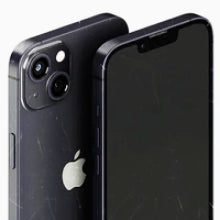


Since 2008, every iPhone in Australia came with a tiny SIM tray. The iPhone Air retired it.
Apple has been selling iPhones in Australia since 2008, and every single one of them shipped with a physical SIM card slot. That changed in September 2025 with the launch of the iPhone Air, the first iPhone to ship globally without a SIM tray. If you buy an iPhone Air in Australia, the only way to connect it to a mobile network is through an eSIM.
That's a real shift, and it raises real questions. What is an eSIM? How do you actually get one? What happens to the physical SIM card sitting in your current phone? Is Australia behind the rest of the world here, or are we right on track? And if you're shopping for a refurbished iPhone, what does this all mean for you?

What "eSIM only" actually means
An eSIM is a digital SIM card. Instead of a tiny physical card you slot into a tray, the SIM is built into the phone itself as a small piece of programmable hardware. Your carrier sends you a code or a QR image, you scan or tap it on your phone, and the eSIM downloads your plan onto that built-in chip. Your number, your data, your minutes, all of it, lives on the phone.
"eSIM only" means the phone has the digital SIM built in but no SIM tray at all. There is no slot to push a pin into, no card to swap. If you want to connect that phone to a mobile network, an eSIM is the only path.
A small removable card that sits in a tray inside your phone. Easy to swap between devices in seconds. Familiar, reliable, and the only option on most phones sold in Australia until recently.
A digital SIM built directly into the phone. Activated by scanning a QR code or tapping a link from your carrier. Can store multiple profiles at once, so you can keep work and personal numbers, or a travel plan, on the same device.
Why the iPhone Air is the moment Australia notices
Apple has been moving toward eSIM in stages. The iPhone 14, launched in September 2022, was the first eSIM-only iPhone, but only in the United States. The iPhone 15, 16, and 17 followed the same pattern: eSIM-only in some markets, physical SIM tray everywhere else. In Australia, every iPhone from the 14 through the 17 Pro still has a tray you can pop a SIM into.
The Air breaks that pattern. Apple's iPhone Air is the first iPhone where every single unit sold worldwide is eSIM-only, including the one you buy in Sydney, Melbourne, or anywhere else in Australia. There is no Australian variant with a SIM tray. The slimmer 5.64mm body is part of the reason: removing the tray frees up internal space for battery and durability, which is how Apple managed to fit a 6.5-inch display, an A19 Pro chip, and 27 hours of video playback into the thinnest iPhone ever made.
It also signals where the rest of the lineup is heading. Once Apple proves the eSIM-only model works in every market it sells in, the path to eSIM-only iPhones across the whole range gets shorter. The Air is the test run for everything that comes after it.
Is Australia late to eSIM, or right on time?
The short answer: Australia is behind the United States by about three years, but we're in the same place as most of the world. The US has had eSIM-only iPhones since 2022. The iPhone 17 expanded that approach to 11 more countries: Canada, Japan, Mexico, Bahrain, Kuwait, Oman, Qatar, Saudi Arabia, the UAE, Guam, and the US Virgin Islands. Twelve markets in total.
Everywhere else, including the UK, the European Union, New Zealand, Singapore, South Korea, and Australia, still gets a physical SIM tray on the standard iPhone 17 and iPhone 17 Pro. So if you bought an iPhone 17 in Sydney last September, you got a tray. If you bought one in Toronto, you didn't. Same phone, different SIM configuration based on where the box was shipped.
| Region | iPhone 17 / 17 Pro | iPhone Air |
|---|---|---|
| United States & Canada | eSIM only | eSIM only |
| Japan, Mexico, Middle East | eSIM only | eSIM only |
| Australia | Physical SIM + eSIM | eSIM only |
| UK, EU, NZ, Singapore | Physical SIM + eSIM | eSIM only |
| China | Physical SIM only | eSIM only |
What's true is that Australian carriers were ready long before Apple forced the issue. All three major networks have supported eSIM since around 2020, and according to coverage from the Sydney Morning Herald, more than 31 Australian telcos and resellers offer eSIM in 2026. The infrastructure isn't the problem. We just haven't had the device push until now.
So Australia isn't late in the sense that we've been blocked. We're late in the sense that Apple didn't need to bring us along until the Air made it inevitable.
What changes for you day-to-day
For most people, the honest answer is: not much, once it's set up. The phone makes calls, sends texts, and uses data exactly the same way. You won't see a difference in coverage, call quality, or speed. What does change is the way you handle the SIM itself, and a few of those changes are upgrades.
Switching carriers gets faster. Today, switching networks usually means ordering a SIM, waiting two to three business days for the post, then activating. With eSIM, you can switch in under 15 minutes from your couch. The new carrier sends you a QR code, you scan it, and your number ports across.
You can run two numbers on one phone. The iPhone Air can hold eight or more eSIM profiles, with two active at any time. That means a work number and a personal number on the same device, no second phone needed. It also means you can park your AU eSIM and activate a travel plan without losing access to either.
Swapping phones quickly gets a bit harder. This is the honest trade-off. With a physical SIM, you could pop the card out and slot it into a backup phone in 30 seconds. With eSIM, you transfer the profile digitally, which usually takes 5-15 minutes and needs a working internet connection on both phones. Not slow exactly, but not instant either.

What eSIM means for overseas travel
If you travel at all, the move to eSIM is genuinely good news. The old workflow looked like this: land overseas, find a vending machine or kiosk, queue up, buy a local SIM, eject your Australian one, hope the new one works, hope you didn't lose your AU SIM in your bag. The new workflow is simpler.
Before you fly, you buy a travel eSIM from a provider like Airalo, Holafly, or any of dozens of others. You receive a QR code by email. The moment you land, you scan it, your local data plan is active, and your Australian eSIM stays parked on the phone, ready to come back online when you fly home. No swapping, no risk of losing a SIM, no queueing at the airport.
You can also keep your AU number reachable for calls while using the cheaper local plan for data. This used to require a dual-SIM phone and a lot of fiddling. On any eSIM phone, including the iPhone Air, it's just two profiles running side by side.
How to switch from a physical SIM to an eSIM in Australia
The universal process is the same everywhere. You contact your carrier, they generate an eSIM QR code or activation link, you scan it on your new phone, and your number transfers across. The whole thing usually takes between 5 and 15 minutes, and it's free with every major Australian carrier.
 Telstra
Open the My Telstra app, tap Services, pick your mobile plan, choose Setup and manage eSIM, then Convert to eSIM. Free, takes about 5 minutes, and your old physical SIM stops working once the eSIM is active. Full instructions on Telstra's eSIM convert page.
 Optus
Optus
Open the My Optus app, tap Account, choose SIM Management, then Transfer or Restore eSIM and follow the prompts. You can also walk into any Optus store and request the swap in person. Free, no plan changes required. Details on Optus's eSIM guide.
 Vodafone
On iPhone, Vodafone uses Apple's built-in eSIM transfer tool that activates automatically during setup. On Android, open the My Vodafone app, go to Your plans, tap Swap my SIM, and pick eSIM. Make sure your account email is current. See Vodafone's eSIM page.
 Smaller providers
Aldi Mobile, Woolworths Mobile, Belong, Boost, Amaysim, Felix, and Kogan Mobile all support eSIM, usually via their own app or online account portal. Process is similar: request the swap, get a QR code, scan it. For provider-specific steps, WhistleOut's provider guide covers each one in detail.
If your provider doesn't support eSIM yet, the cleanest move is to port your number to one that does. Porting between Australian carriers is regulated, free, and usually finishes within 24 hours.
What this means if you're buying a refurbished iPhone
Most OzMobiles customers bring their own SIM from a previous phone. That workflow needs one small adjustment for an eSIM-only device like the iPhone Air. The physical SIM in your old phone won't fit, because there's nowhere to put it. Instead, you call your carrier, request an eSIM swap on the same number, receive a QR code or activation link, and scan it on the new phone. The number stays yours, the plan stays the same, and the change happens at no cost.
It takes a few extra minutes the first time, and it's a one-time job. Once your number is on eSIM, future phone changes are simpler than the old physical-SIM workflow ever was. The phones we sell are unlocked and ready to accept any Australian eSIM, so you can finish setup the day your iPhone Air arrives.
Still prefer a physical SIM tray? Here's what to look for.
If you'd rather keep a physical SIM tray for now, the rest of Apple's lineup still has one in Australia. The iPhone 17 and iPhone 17 Pro both ship with a tray in this market. So do the iPhone 16, 16 Plus, 16 Pro and 16 Pro Max, the iPhone 15 range, and the iPhone 14 range. All of them also support eSIM, so you get the option of either approach. Browse the refurbished iPhone range at OzMobiles to see what's in stock, and check our guide to refurbished condition grades if you want to know what each grade actually means before you buy.
Samsung Galaxy and Google Pixel phones sold in Australia also retain a physical SIM tray, and have done so consistently. Samsung in particular has stayed dual-SIM across both its flagship Galaxy S line and its Galaxy Z foldables, with no eSIM-only Samsung models in any major market as of 2026.
Common eSIM concerns, answered honestly
The shift to eSIM raises a few practical worries.
"What if I lose my phone?" An eSIM is arguably safer than a physical SIM in this scenario. A physical SIM can be removed by a thief and used in another phone. An eSIM is locked to the device's hardware, so it can't be popped out and reused. You contact your carrier, they deactivate the eSIM on the lost phone and issue a new one to your replacement device, usually within the hour.
"Is eSIM less secure?" No. eSIMs are subject to the same SIM-swap scam risks as physical SIMs, which is a social-engineering problem at the carrier level, not a SIM technology problem. The eSIM hardware itself is harder to clone than a physical SIM and tied to your device, which most security professionals view as a net positive.
"Will it cost me more?" No. Every major Australian carrier offers eSIM activation free of charge, with the same plan pricing as physical SIM. No new fees, no premium tier.
"What if my phone dies and I need to use a spare?" This is the genuine limitation. You can't just swap the SIM into another phone. You contact your carrier, they issue a fresh eSIM QR code to activate on your backup device. With most carriers, this takes 10-20 minutes once you're through to support. Worth knowing in advance, but not a daily-life problem.
Buy your next iPhone at OzMobiles
Whether you're ready for the iPhone Air and an eSIM-only future, or you'd prefer an iPhone 17 with a familiar SIM tray, every device we sell is tested, graded, and backed the same way.
OzMobiles is 100% Australian-owned and operated. Every iPhone in our range, eSIM-only or otherwise, ships unlocked and ready for any Australian carrier.
Frequently asked questions
Yes. The iPhone Air is the first iPhone that ships globally without a physical SIM tray, and that includes every unit sold in Australia. There is no Australian variant of the iPhone Air with a SIM card slot. If you buy one, you connect it to a network using an eSIM.
For most people, no. With the major Australian carriers, the swap takes 5 to 15 minutes and is done through your carrier's app or website. You request the swap, receive a QR code or activation link, scan it on your new phone, and your number transfers across. No store visit needed unless you prefer one.
The main one is that you can't instantly swap your SIM into a backup phone if your main one breaks. Instead, you contact your carrier and they issue a fresh eSIM to your backup device, which typically takes 10 to 20 minutes. You also need an internet connection to activate an eSIM, so a brand-new SIM-less phone needs Wi-Fi for first setup.
Yes. Switching to an eSIM with the same carrier is just a SIM swap, not a number change. Your existing number, plan, and account details all stay the same. If you're switching carriers and going to eSIM at the same time, you can port your number across in the same step, also free, also fast.
You contact your carrier and they deactivate the eSIM on the lost or damaged device and issue a new one to a replacement phone. The whole process usually takes 10 to 30 minutes once you're through to support. An eSIM is arguably safer than a physical SIM here, because a thief can't pop it out and use it in another phone.
Yes. Every iPhone Air we sell ships unlocked, factory-reset, and ready to accept any Australian eSIM the moment you scan the QR code from your carrier. No carrier locks, no SIM lock, no extra steps. You unbox the phone, activate your eSIM, and you're on the network.


